

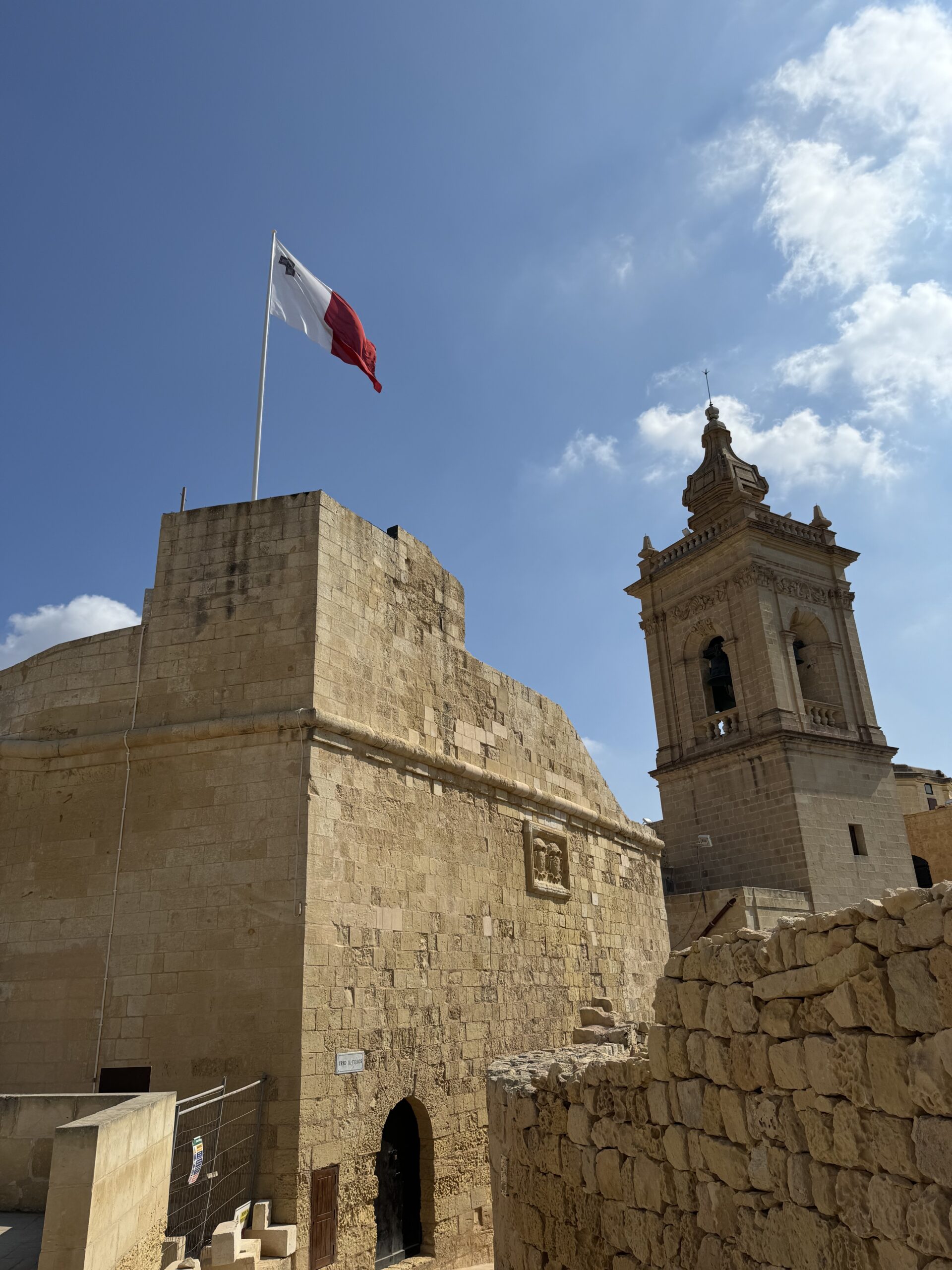
Malta sits in the central Mediterranean in Southern Europe — an island European state. To understand Malta, first separate three layers: geographic Europe, EU membership, and participation in the Schengen area.
According to the Maltese government, the Maltese Islands lie about 93 km south of Sicily and roughly 288 km north of Libya, with a total land area of around 316 km². The main inhabited islands are Malta, Gozo and Comino; Malta is the largest, home to the capital, Valletta. [1]
This also explains why descriptions of Malta in Chinese sources often mix "Europe", "Mediterranean" and "Southern Europe": these describe different geographic layers. Position Malta first in Southern Europe and the central Mediterranean, then look at its EU and Schengen memberships.
Zoom in on the map and you will see that Malta, though small, is not a city or a region of another country but a sovereign state. Valletta is the national administrative centre, and Malta, Gozo and Comino are the main islands you will usually see on maps. Keeping this straight prevents the common mistake of treating Malta as an Italian city or dependency.
What kind of country is Malta?
Malta is a sovereign European state and an archipelago. "European country" describes its geographic location; "EU member state" describes membership of the European Union. The two are related but are not the same layer — a country can lie in Europe without belonging to the EU.
Small land area does not change Malta's status as a sovereign state. To confirm statehood, look at sovereignty, geographic location and formal memberships — not at size, population or distance from neighbours. Separating these facts also helps avoid mistaking Malta for a city, a region or part of another country.
Europe, the EU, Schengen — three layers of Malta's status
These three terms often appear together in profiles of European countries, but they mean different things. Ask first: is this about geographic location, EU membership, or a regional cooperation arrangement?
| Layer | What it describes | Malta's position |
| Europe | A geographic region | Malta lies in Southern Europe, in the central Mediterranean. |
| The EU | Membership of a political and legal community | Malta has been an EU member state since 1 May 2004. [2] |
| Schengen area | A regional cooperation arrangement among European states | Malta has participated in the Schengen area since 21 December 2007. [2] |
"In Europe" does not imply "in the EU", and "EU member" does not automatically equal "Schengen country". The three layers correspond to geography, membership and a cooperation arrangement respectively, and none substitutes for another.
Geography does not change when a state joins or leaves a cooperation arrangement; EU and Schengen status each derive from their own legal and institutional frameworks. The most reliable approach is to check the EU's official country profile and the official Schengen membership information separately, rather than using one label in place of another.
When reading country profiles, confirm three things in turn: position on the map, EU membership, and Schengen participation. This keeps geography and institutional membership distinct.
What is EU citizenship, and how does it relate to member-state nationality?
EU citizenship is a legal status established by the EU Treaties. Under Article 20 of the Treaty on the Functioning of the European Union, every person holding the nationality of an EU member state is a citizen of the Union. EU citizenship is an additional Union-level status layered on top of national nationality; it does not replace it. [3]
Distinguish "member-state nationality" from "EU citizenship": the former is determined by each state's nationality law, while the latter presupposes holding such nationality. EU citizenship does not replace a person's existing national nationality, and this section does not expand on the specific rights under the Treaties.
EU citizenship by itself says nothing about how a member state grants nationality; nationality rules remain a matter for each member state's law.
Frequently asked questions
Is Malta close to Italy?
Yes. Malta lies about 93 km south of Sicily, placing it between Southern Europe and the central Mediterranean. [1]
What is the capital of Malta?
Valletta, on the island of Malta — one of the country's core administrative and institutional centres. [2]
Are all European countries EU members?
No. Europe is a geographic region; EU membership is defined by formal accession. Check the EU's official list of member states.
Are all EU member states in the Schengen area?
No. EU membership and Schengen participation are different regimes with different membership scopes; check the official sources separately. [4]
Where to start if you are interested in Maltese citizenship
Geography, EU membership and Schengen participation describe Malta as a state; they cannot replace legal analysis of citizenship. For Maltese citizenship, consult the current legal instruments and the corresponding immvista topic pages.
To read the legal information in the context of your own situation, see the relevant immvista topic and professional support — always on the basis of the law in force at the time.
Sources
[1] Malta Government | The Maltese Islands
[2] European Union | Malta – EU country profile
[3] EUR-Lex | Article 20 TFEU / EU citizenship
[4] European Union | Travel documents for non-EU nationals / Schengen area